FDA Regulatory Affairs: Operational Guidance for Clinical Development book cover

Clinical Research & Regulatory Affairs

FDA Regulatory Affairs

Operational Guidance for Clinical Development

Start here when a development decision depends on FDA requirements or a regulatory pathway.

FDA Regulatory Affairs connects FDA statutes and 21 CFR requirements to clinical development work. It explains how FDA guidance applies from premarket through postmarket, distinguishing medical-device pathways from those used for drugs and biologics.

Read a sample before choosing your edition.

Read Chapters 1 and 2 free

Abridged audiobook. AI narration by Digital Voice Raymond. Hear a free audio sample on Google Play Books (opens in a new tab).

If you’ve read FDA Regulatory Affairs, please consider leaving an honest review on Amazon.com.

About this book

Updated for 2026 to reflect current FDA regulations and clinical development practice.

FDA regulatory work requires a team to determine which source controls a decision and how the requirement applies to a specific product. The team also has to document the rationale before work moves forward. Statutes, 21 CFR, FDA guidance, center practice, product type, and lifecycle stage all matter. Problems usually start when teams rely on memory or informal interpretation, or when they document the rationale too late to guide the work.

FDA Regulatory Affairs: Operational Guidance for Clinical Development connects FDA expectations to clinical development work across the product lifecycle. It explains how teams use statutes and 21 CFR requirements to build plans and controls, with FDA guidance supporting documentation that can hold up under review.

The book follows the product lifecycle from premarket through postmarket, distinguishing medical-device pathways from those used for drugs and biologics. Topics include product classification and jurisdiction, regulatory pathways, FDA meeting strategy, quality systems, data integrity, clinical trial compliance, inspections and 483 response, safety reporting, pharmacovigilance, labeling and promotion, recalls and corrections, postmarket oversight, and regulatory intelligence.

Teams document regulatory decisions in protocols, submissions, plans, procedures, and quality records. That record supports lifecycle control, including inspection preparation and safety processes.

Read the book end to end for structure. During planning and execution, use it as a working reference that also supports inspection preparation.

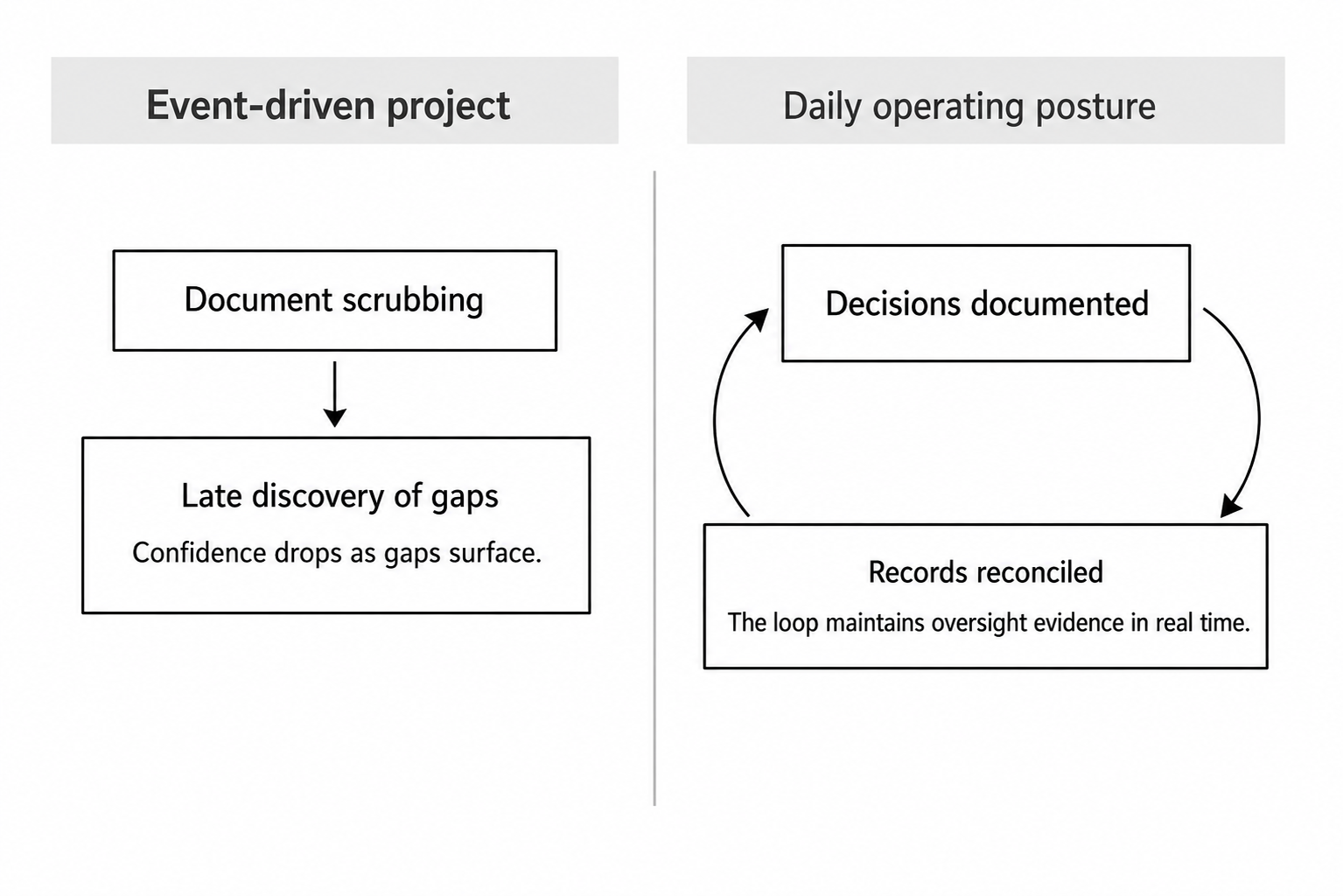
Diagram comparing event-driven inspection readiness with a daily operating posture
Inside the book Figure 1.1. Inspection readiness: event-driven versus daily operating posture.
View full-size figure (opens in a new tab)
Figure description

Who it is for

Professionals and leaders working in clinical operations, regulatory affairs, quality, and project management. It is also for graduate students in those fields.

Readers can use this book to

  • Apply FDA primary sources to practical deliverables and clear ownership
  • Plan pathway strategy across IND, IDE, NDA, BLA, 510(k), De Novo, PMA, and lifecycle changes
  • Prepare FDA meetings and communications with a clear record that links each question to its rationale and final decision
  • Build inspection-ready clinical and quality operations, including safety work, with defined escalation paths supported by disciplined documentation.
  • Support safety reporting and postmarket oversight by defining the reportability logic and timeline, then documenting each handoff
  • Sustain compliance through change control and remediation. Document the governance for recalls or corrections.

Topics covered

The book works through the parts of FDA regulatory affairs that teams have to handle in practice.

  • FDA primary sources
  • Regulatory pathways
  • FDA meeting strategies
  • Clinical trial compliance
  • Quality systems
  • Inspections
  • Safety reporting
  • Recalls and corrections
  • Postmarket oversight
  • Regulatory intelligence

Series context

This title is part of the Clinical Research & Regulatory Affairs series. The Clinical Research & Regulatory Affairs series covers the parts of clinical development where planning, documentation, budget, timelines, vendors, and regulatory expectations intersect.

For the acronyms and terms used across the books, see the Clinical research glossary.

Publication details

Formats and editions

Details and length differ by format. Publication dates can vary too.

Format details and publication dates
Format Details Length Publication date
Kindle (opens on Amazon in a new tab) ASIN: B0GL9GNGDW Second edition 548 pages February 9, 2026
Paperback (opens on Amazon in a new tab) ASIN: B0GLR8WQ25 ISBN-13: 979-8-2468-1330-0 Second edition 547 pages February 9, 2026
Hardcover (opens on Amazon in a new tab) ASIN: B0GLR5KGC1 ISBN-13: 979-8-2468-1479-6 Second edition 547 pages February 9, 2026
AudiobookAbridged ISBN-13: 979-8-951764-04-1 Platform: Spotify (opens in a new tab) Platform: Google Play Books (opens in a new tab) Narration: Digital Voice Raymond (AI narration) 11 hr 58 min August 1, 2026

About the audio edition

This abridged audio edition contains the complete main text of Chapters 1 through 18, adapted for listening. Figures, tables, example outlines, and the acronym and glossary reference remain in the Kindle and print editions.

Inside the book

Table of contents

Preview Chapters 1 and 2 before you buy.

  1. 1 FDA system and how to use this book Read free
  2. 2 FDA history and inflection points Read free
  3. 3 FDA organization and jurisdictional authority
  4. 4 The rulebook for statutes and the CFR, with guidance
  5. 5 Global harmonization: WHO and ICH in broader context
  6. 6 Drug pathways: IND to NDA and lifecycle
  7. 7 Biologics pathways: IND to BLA and lifecycle
  8. 8 Device pathways: 510(k), De Novo, PMA, IDE
  9. 9 Mandatory responsibilities: manufacturers to importers
  10. 10 cGMP and quality systems
  11. 11 FDA systems and databases
  12. 12 Clinical trials compliance: GCP operations
  13. 13 Safety reporting and pharmacovigilance
  14. 14 Labeling across promotion and packaging operations
  15. 15 Emergency pathways and global health
  16. 16 Inspections and 483 response playbook
  17. 17 Recalls and corrections through sustained remediation
  18. 18 Regulatory intelligence: current and emerging topics
David Lew

About the author

David Lew

David Lew is an Adjunct Lecturer in the Master of Science in Regulatory and Clinical Research Management program at Regis College, where he teaches graduate-level coursework in clinical research project management and FDA regulations. He is also a senior clinical operations leader at a global CRO, with more than twenty-three years of clinical research experience.

Related reading

Where to go next